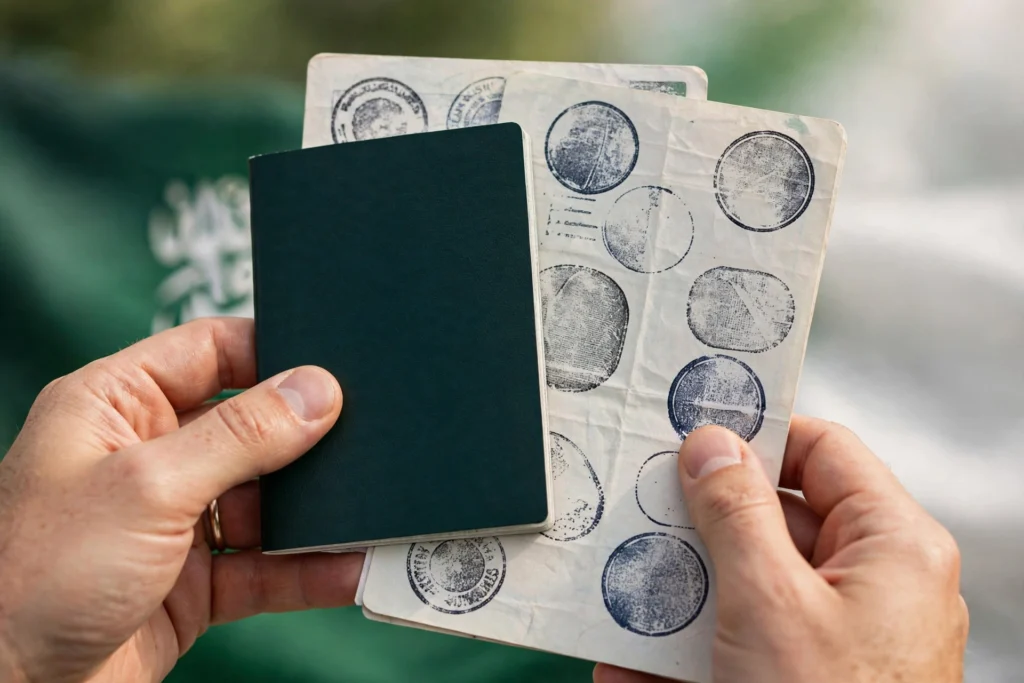

The Saudi work visa process is entirely employer-initiated — your role as the worker is to provide correct documents on time. Understanding each step protects you from fraud and delays. Here is the complete 2026 process for Pakistani applicants.
Step 1: Get a Job Offer and Registered Contract
Your Saudi employer issues an offer letter and employment contract. The contract must be registered on the Qiwa platform (the Saudi MHRSD system), after which you electronically agree to it. Review it carefully: your job title, salary, and tier classification determine your Iqama status. Do not start any other step until you have a genuine, Qiwa-registered contract.
Step 2: Employer Secures the Visa Authorization (Wakala)
Saudi employers hold block visa quotas based on their Nitaqat (Saudization) compliance. Your employer draws a quota and submits a Wakala (authorization) request via Qiwa, using the company’s commercial registration, your passport copy, and the offer letter. Once approved, the employer receives a visa authorization number — this is shared with you and is essential for everything that follows.
Step 3: Attest Your Documents
Get these attested in this order:
- HEC (Higher Education Commission) — degrees and educational certificates
- MOFA Pakistan (Ministry of Foreign Affairs)
- Saudi Embassy Islamabad — final embassy attestation (or the Saudi Consulate in Karachi for Sindh/Balochistan applicants)
For technical professions under the Professional Verification Scheme, an additional skill exam may apply. Keep name spellings identical everywhere.
Step 4: Medical Examination at an Approved Center
Complete your medical only at a Saudi Embassy-approved medical center in Pakistan (the Wafid/GAMCA system). Tests cover blood screening (HIV, Hepatitis), chest X-ray (TB), and general fitness. Results are valid for 3 months — book the medical *after* your Qiwa contract is registered, not speculatively. Failing the medical means visa rejection.
Step 5: Biometric Registration
Submit fingerprints and photographs at an authorized Visa Application Center (VAC) as part of identity verification.
Step 6: Online Application and Embassy Submission
Your file — passport, invitation/authorization, contract, attested degree, medical certificate, biometrics — goes through the Enjazit Saudi Visa Portal or an authorized agency to the Saudi Embassy. Processing typically takes 3 weeks to 2 months, depending on paperwork completeness (simpler trade cases often finish in 2–5 weeks).
Step 7: Visa Stamping and Travel
Once approved, the visa is stamped in your passport. Travel to Saudi Arabia within 30 days of visa issuance. On arrival, your employer completes your Iqama (residency) formalities.
Document Checklist (Keep Handy)
☐ Valid passport (6+ months, blank pages)
☐ CNIC copy
☐ Original job offer letter with title, salary, contract duration
☐ Qiwa-registered employment contract
☐ Visa authorization number from employer
☐ Attested educational/professional certificates
☐ Medical fitness certificate (approved center)
☐ Police Character Certificate
☐ Passport-size photos (Saudi specifications, white background)
☐ Completed visa application form
Realistic Costs for the Worker
| Item | Typical Cost |
|---|---|
| Medical test | PKR 20,000 – 30,000 |
| Police Character Certificate | PKR 1,000 – 2,000 |
| Attestation (HEC/MOFA/embassy) | Varies by document |
| Visa/government fees | Mostly paid by the sponsor |
*(Typical ranges from current Pakistani visa guides; confirm at time of application.)*
After Arrival: Your First 30 Days
- Your employer completes your Iqama (residency permit) — keep copies of it and your contract with you
- Open a local bank account (your employer usually helps) for salary transfers
- Register on the Absher platform — Saudi Arabia’s official portal for residency and government services
- Save the Pakistani embassy/consulate helpline numbers in your phone
- Send money home only through legal channels (banks or licensed exchange companies) to keep a clean record
Common Problems and How to Avoid Them
- Wakala delays — usually caused by incomplete company documents or quota issues at the employer’s end; stay in contact with the employer’s representative
- Document rejection — incorrect attestation order or expired certificates; follow the HEC → MOFA → Embassy chain exactly
- Profession mismatch — experience letter says one trade, visa says another; align them before submission
- Advance-fee fraud — never pay the full agent fee before visa stamping
Frequently Asked Questions
Q: Can I apply for a Saudi work visa myself without an employer?
A: No. The process is employer-led from the first step (Qiwa contract) to the last. No employer, no visa.
Q: How long is the medical result valid?
A: About 3 months. That’s why you should book it after the contract is registered, not before.
Q: What is the Wakala?
A: The employer’s official authorization request on the Qiwa platform that generates your visa authorization number. It’s the employer’s step, not yours — but you should confirm it exists.
Q: Can I travel immediately after stamping?
A: You must travel within 30 days of visa issuance, so have your travel plans ready.
—
Sources:
- https://abroadmate.me/guides/saudi-arabia-work-visa-iqama-2026
- https://alrehafinternational.com/how-to-get-saudi-work-visa-from-pakistan-complete-guide/
- https://sohailwaqas.com/wakala-check-for-saudi-visa-process-steps-expert-tips/
- https://jobsjunctiononline.com/saudi-factory-worker-visa-from-pakistan/
- https://jobsjunctiononline.com/saudi-ac-technician-visa-from-pakistan/